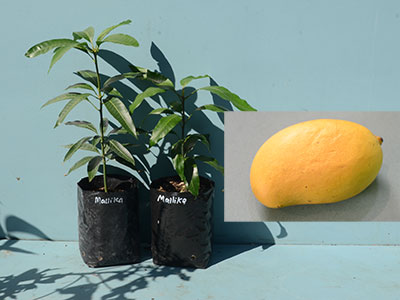
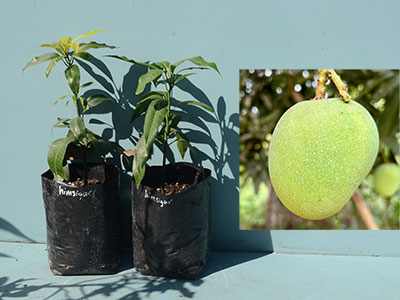
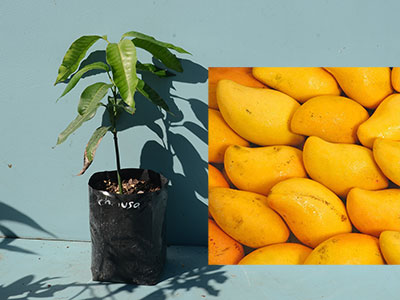
Kesar — Queen of Mangoes
Latin name: Mangifera indica cv. 'Kesar'
Kesar has a romantic history. In 1931, in the foothills of Mount Girnar in Gujarat, India, a grower named Sale Bhai planted what would become one of the world's most beloved mangoes. In 1934, the Nawab of Junagadh saw the fruit's brilliant orange flesh and declared "This is Kesar!" — saffron in Hindi and Gujarati. The name stuck.
At BensGarden, we have found Kesar to stand miles ahead of most other varieties we have tried in NZ conditions. Virtually 100% freedom from anthracnose, excellent cold tolerance, and outstanding flavour. Commercial growers we supply are already reporting excellent results. Whether you are a first-time mango grower or experienced, we recommend Kesar as your starting point.
NZ Suitability
Why it grows here: Kesar is grown commercially in Gujarat and extending into Himachal Pradesh — regions that include cold winters and warm summers, much like New Zealand's north. The cold tolerance of Kesar is better than most people assume, precisely because it has been grown successfully in some of India's colder mango regions.
Best NZ regions: Northland, Auckland, Bay of Plenty and Gisborne in a warm sheltered spot. One of the most reliable outdoor varieties for NZ growing.
Greenhouse: Recommended but not essential in northern NZ. A greenhouse improves consistency of flowering and fruit quality everywhere. Even up north, a structure of some kind will improve your results significantly.
Wind shelter: All mangoes prefer shelter from strong winds — particularly during flowering when wind causes flower drop and reduces fruit set. A sheltered north-facing position is ideal. Young trees especially benefit from wind protection while establishing.
Frost: Can handle mild occasional frost when mature. Recommend frost protection when young.
Flavour Experience
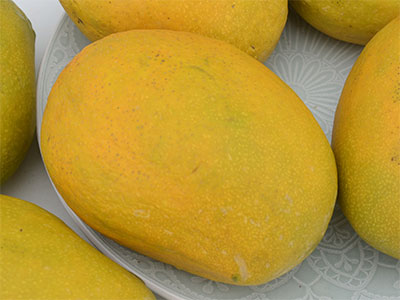
Kesar mangoes are nothing like the average mango on supermarket shelves. Pure indulgence — intensely sweet with rich honeyed notes, hints of caramel, and a creamy almost custard-like texture. The flesh is saffron-orange, completely fiberless, and melts in your mouth. Unlike some varieties that are quite tart, Kesar is all sweetness with just enough complexity to keep things interesting. By growing your own, you get the full flavour of tree-ripened fruit — miles better than commercially picked-green fruit.
Health Benefits
One Kesar mango delivers over 67% of your daily vitamin C needs. Loaded with vitamin A and beta-carotene — excellent for eye health. Rich in potassium and packed with antioxidants including mangiferin, which research suggests may help protect against inflammation. Also a good source of folate, vitamin B6 and vitamin E. Nature's perfect healthy indulgence.
Fruiting in New Zealand
In NZ's subtropical climates, Kesar typically fruits in late summer to early autumn (February to April). Trees flower in late winter to early spring (August to October), and fruit takes about 3–4 months to mature. Harvest when the shoulder starts to show a hint of yellow and a slight pink blush, then ripen at room temperature. Fruit colour at harvest depends on temperatures during development — don't wait for full colour change on the tree.
Growing Notes from Ben
Warmth is essential. Full, unobstructed sun is critical. Kesar needs maximum heat and light to produce sweet quality fruit. Plant in the absolute warmest, sunniest spot you have — north-facing is ideal.
Wind shelter. Protect from strong winds, particularly during flowering August–October. Wind during flowering drops flowers and reduces fruit set significantly. A sheltered north-facing wall or greenhouse provides ideal conditions.
Smart watering. About 2–3 months before you want flowering, reduce watering significantly to stress the tree — this triggers flowering. When flowers appear, resume regular watering. Once fruit is sizing up, consistent moisture is crucial.
Manageable size. Medium vigour with a spreading habit — much more manageable than Southeast Asian varieties. Regular tipping keeps trees at 3–4 metres and actually encourages fruiting.
Gallery
Click images to enlarge
Quick Planting Guide
- Location: Warmest, sunniest spot — north-facing and sheltered from wind
- Soil: Deep loamy, well-draining (pH 5.5–7.5)
- Water: Reduce 2–3 months pre-bloom to trigger flowering
- Feed: Balanced fertiliser; switch to high-K when fruiting
- Nitrogen: Low at all stages — none when fruiting
- Wind: Shelter from strong winds especially during flowering
- Tipping: Tip when young to build branching structure
- Harvest: Pick when shoulder shows colour, ripen indoors
Common Questions
Why Kesar for NZ? Our signature variety — most reliable, best disease resistance, outstanding flavour. Most commercial growers we supply choose Kesar. When in doubt, start with Kesar.
Frost tolerance? Better than most mangoes. Grown in cooler parts of India including Himachal Pradesh. Mature trees handle brief -1°C. Protect young trees below 5°C.
When will it fruit? Typically 2–5 years from planting depending on conditions and care.
Can I grow it outside? Yes — in Northland, Auckland, Bay of Plenty, Gisborne in a good warm spot. A greenhouse improves results everywhere.
Growing Videos
🌿 More exclusive videos in the Mango Circle members area.