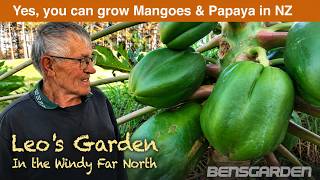
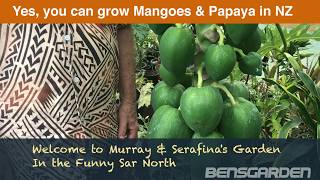
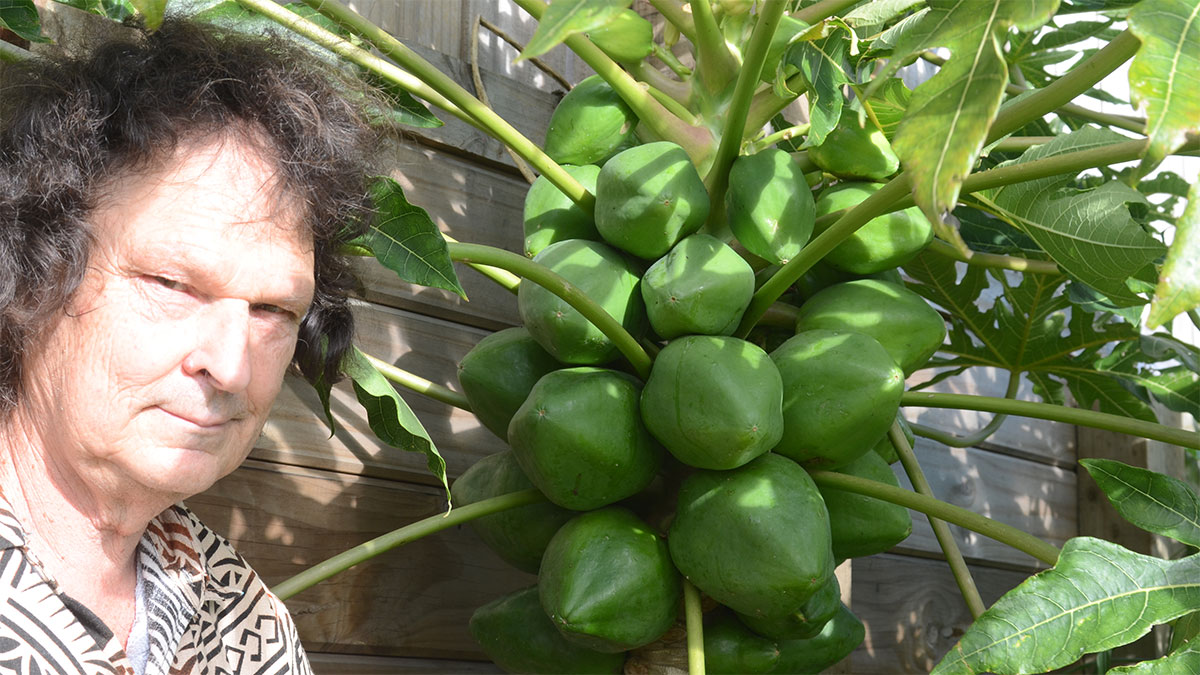
Ben has 49 years growing tropical fruit in New Zealand. Ben says, "this particular F1-Hybrid Papaya is one of the fastest-fruiting trees you can grow — and with the right advice, grow remarkably well in NZ."
We supply many commercial growers but also provide the same quality, heavy-bearing papaya trees to home growers as well.
We'll add more here soon, but for the moment, check out our latest Mango & Papaya video — and our papaya tasting videos too.
All fruit in this video are from our customers. Yep, genuine BensGarden Papaya & Mango trees.

Our F1 Red Lady papayas are going out now. Courier anywhere in New Zealand, or collect from Kaitaia. $35 each.
$35 each. Order in the BensGarden Shop, along with our other tropical trees and greenhouse gear.
Add papaya to my orderSee your order, add more papayas (all your papayas drop to $32 each), see courier rates, or change your delivery to pick-up.
Check my orderSee everything currently available — papaya, tropicals, and more from the BensGarden nursery.
See all treesPostage for 2 papayas is about the same as for 1, so they travel well together.
| Per box | 1 papaya | 2 papayas | 4 papayas |
|---|---|---|---|
| North Island – town/city | $14.41 | $14.21 | $20.87 |
| North Island – rural (RD) | $19.91 | $19.11 | $26.57 |
| South Island | $19.91 | $19.11 | $38.22 (2 boxes) |
Some remote areas may cost a little more.
First Generation F1 Hybrid Red Lady — by far the best variety in every way for growing in New Zealand. That's why it's the only variety we produce.
| Variety | Classification | Avg Fruit Size | Flesh | Time to Fruit | NZ Suitability |
|---|---|---|---|---|---|
| Red Lady | Commercial — Genuine BensGarden F1 Hybrid | 1.5–2.5kg Range: 1–4kg |
Deep orange-red, sweet, low fibre | 10–14 months | This is by far the best variety in every way for NZ conditions. |
Standard papayas grow tall, need enormous space, take forever to fruit, and often get knocked by cold or wind before producing much. Red Lady makes it far easier for a first-time NZ grower to get a genuinely good result.
Nothing like a hard, unripe supermarket papaya. Silky, buttery-soft flesh around 13%+ brix, with a tropical melon-and-peach flavour and a strong perfume when ripe.
Compact enough to manage easily, and a pot means you can move it under cover for winter — the single biggest factor in success in most of NZ.
Very high in vitamin C, rich in folate and potassium, and contains papain — a digestive enzyme most supermarket fruit has none of by the time it's picked hard and green.
| Size, in a container | Under 2m in a 40–60L pot |
| Sun | Full sun essential — 6–8 hours minimum |
| Soil | Must be well-drained. pH 6.0–7.0 |
| Feed | Heavy feeder — every 2–3 weeks during active growth |
| Fruit size | 1.5–2kg, deep red-orange flesh |
| Temperature | Prefers 25–30°C. Mature plants tolerate a brief 0–2°C |
Can I grow it outdoors?
Only in the warmest NZ spots with frost protection. A container plus shelter is the reliable path.
Frost tolerance?
More cold-tolerant than standard papaya, but still tender — protect below 5°C when young.
How many plants do I need?
Just one — it's enough to give you fruit.
Most people are surprised how quickly papaya fruits. Plant in spring, fruit by the following summer. It's not complicated — but it does need the right conditions, especially when it comes to temperature and ventilation.
Ben has been growing papaya in Northland since the 1970s. The varieties, the methods, and the common mistakes — it's all mapped out.
Growing Guide — Coming SoonPapaya is faster and easier than mango — but it has some specific requirements. Get these right and it's very rewarding.
Papaya needs warmth but cannot tolerate overheating. The right greenhouse setup makes the difference between success and failure.
Greenhouse optionsA 1.5×1.5m grow hut works well for one tree — inexpensive, easy to build, and effective for the first winter.
See DIY plansPapaya needs free-draining soil above everything else. Waterlogged roots are the fastest way to lose a tree.
Coming soon